January 2, 2026
Soft Robotics Design Studio at NuVu High School
When a student is immersed in a NuVu design studio, learning comes not only from the skills they acquire, but from the experiences they participate in along the way.
Take Soft Robotics, for instance, taught this winter by coaches Ryan Ferguson and NuVu alum Pierre Belizaire.
With the goal of creating an assistive device, student work in the Soft Robotics studio was shaped by two primary constraints: the medium and the application.
The Constraints
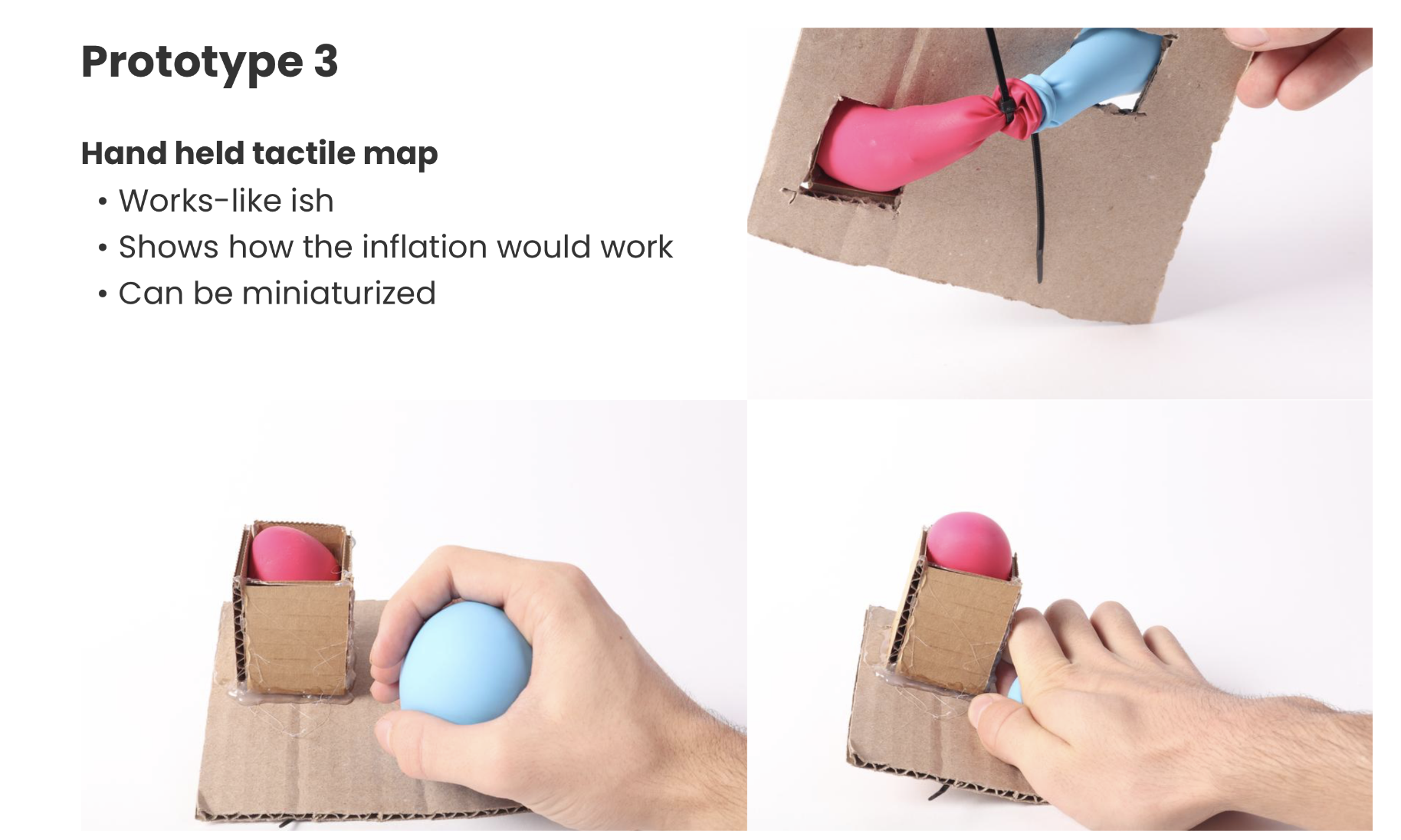
Rather than relying on rigid mechanisms—gears, linkages, or hard components—the studio focused on soft materials. As the name suggests, soft robotics typically uses flexible materials that are pneumatically or hydraulically operated, relying on air or liquid to actuate movement.
“The advantage is that it’s more compliant, safer, and more adjustable and versatile—especially for something like a wearable device,” explains Coach Ryan.
The application—or user group—that students explored included blind, low-vision, and hearing-impaired individuals. The aim was to use soft robotics to design haptic interfaces that communicate information through touch. As Ryan puts it, “This meant thinking about how we can provide a sense of touch, or tactile feedback, allowing someone to interpret, understand, and engage with experiences that would otherwise be difficult to access.”
Field Trips
Early in the studio, Ryan and Pierre helped ground student work through a visit to Perkins School for the Blind. There, students gained insight into the daily experiences and challenges faced by Perkins students, while also seeing firsthand the adaptive spaces and assistive technologies designed to support blind, low-vision, and hearing-impaired learners.
Next, the group visited MIT’s Fabrication-Integrated Design Lab, part of MIT’s Mechanical Engineering Department and a hub for soft robotics research. NuVu students were exposed to a wide range of prototypes and ongoing research. “This trip really helped our students understand the depth of validation, testing, and iteration that’s part of soft robotics,” Ryan shared. Pierre adds, “Seeing those products and applications really helped students brainstorm their own ideas and strategies.”
Skill Building
Back on the NuVu campus, students began developing potential concepts and, with guidance from their coaches, narrowed their focus. From there, they moved into high-fidelity fabrication, using 3D printing and silicone casting to create actuators with high elasticity—materials that can inflate, deflate, and withstand wear.
This phase of the studio introduced students to new technical skills, including mold making, working with silicone, and eventually integrating electronics, pumps, and valves into their prototypes.
“The thing that excites me most is seeing the range of ideas coming out of this studio,” shares Pierre. “I was surprised by how quickly some students work—I would never have thought to do that when I was their age. Some are extremely experienced with CAD and coding, and I’m constantly impressed by what they’re producing.”
Projects
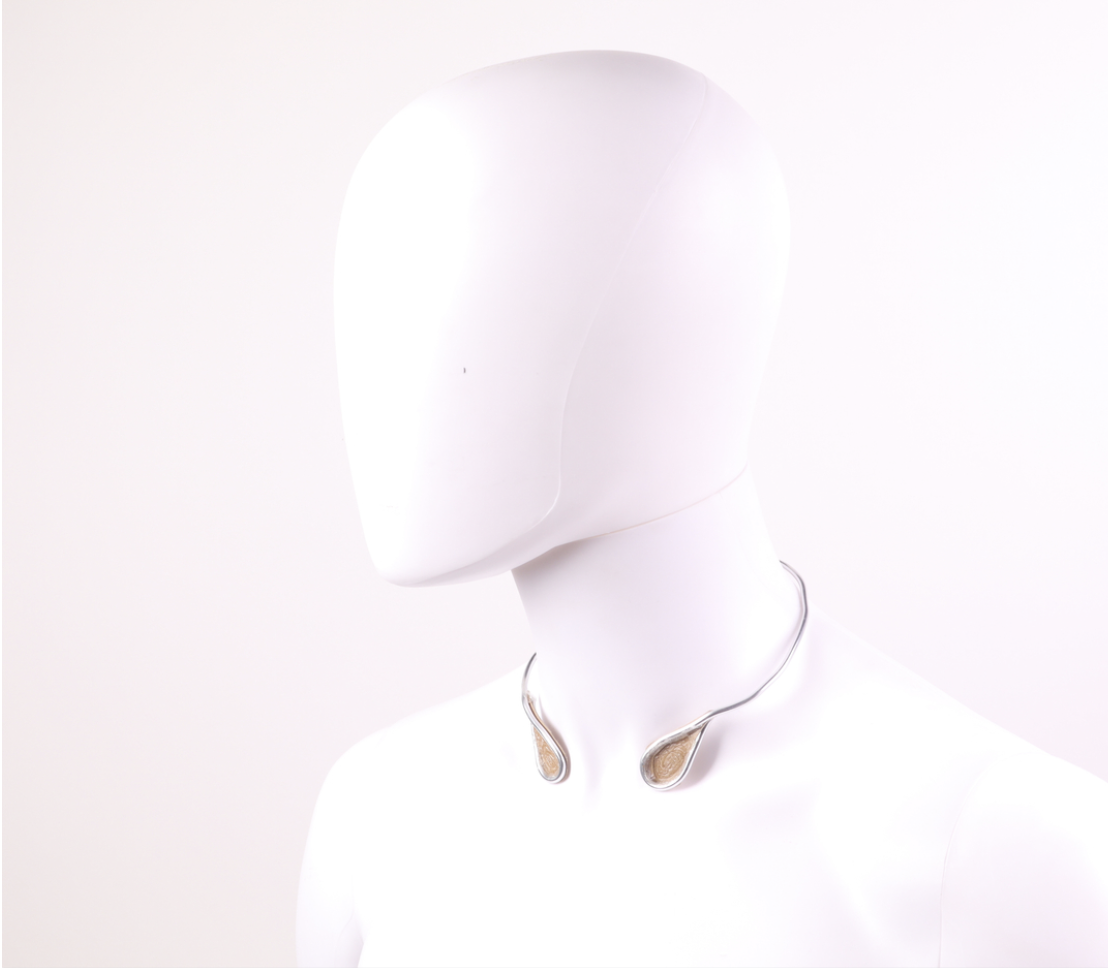
One pair of students is designing a tuning device that helps someone who is hearing impaired know when an instrument is in tune. The device delivers feedback through soft silicone bladders that gently inflate on either side of the neck, using touch instead of sound to signal when a note is on pitch.
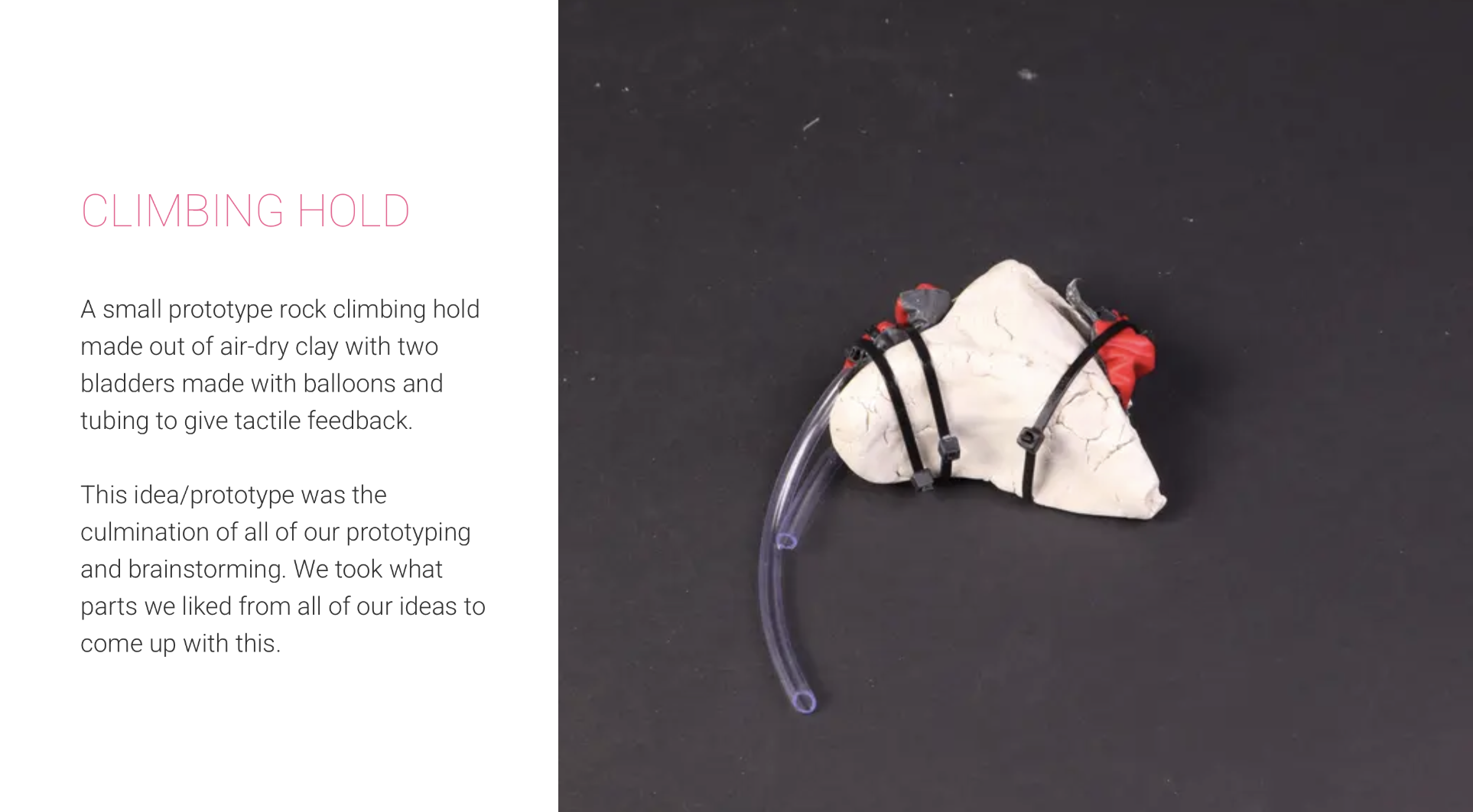
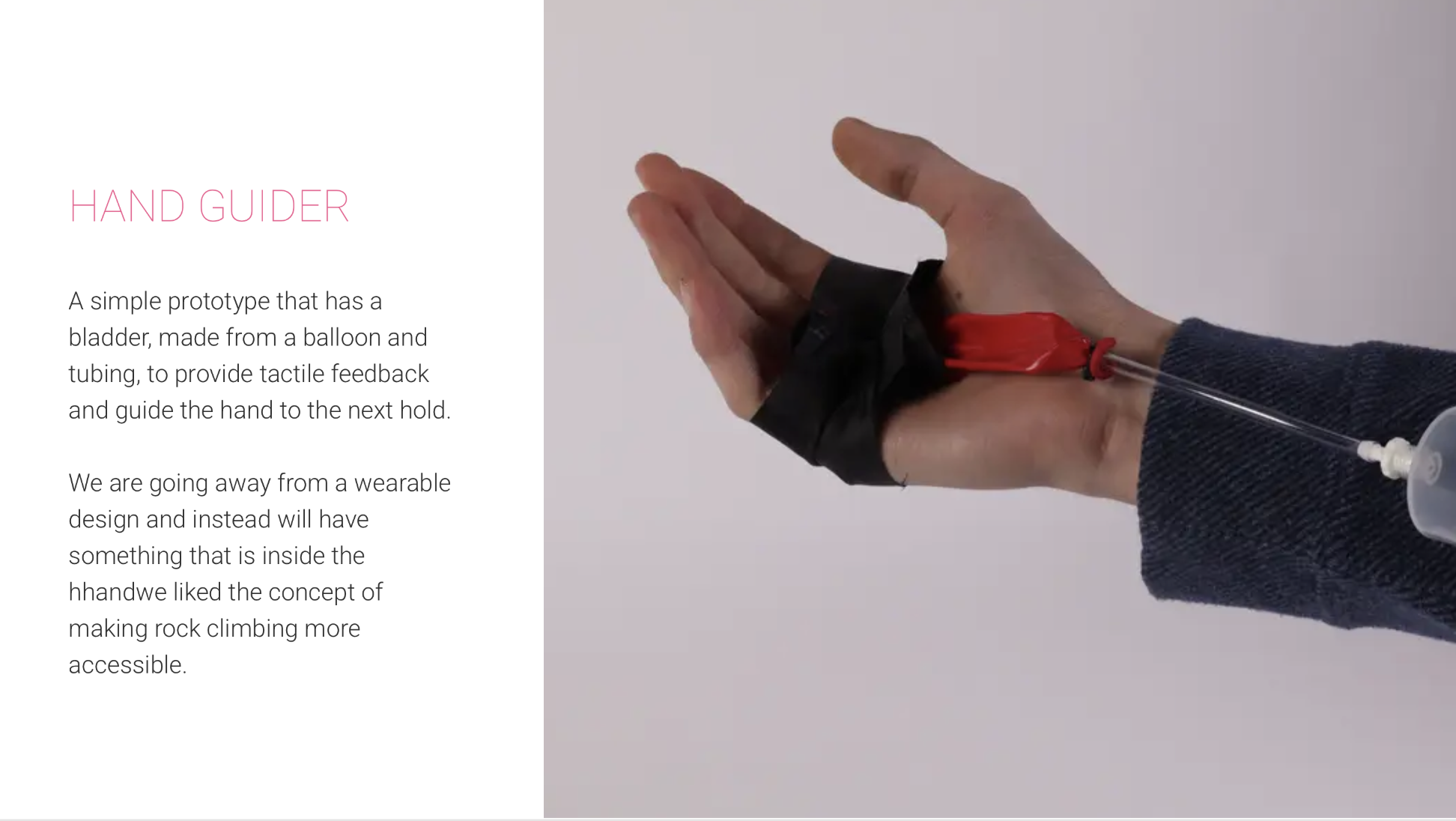
Another team is designing a climbing wall specifically for blind users, using soft robotics to provide tactile guidance that helps climbers navigate their next move. Through gentle physical cues rather than visual signals, the wall communicates direction and orientation—reimagining how accessible movement and play can be designed.
Pierre was especially impressed by how naturally students approached user-centered design. Speaking about one student, he noted that the work was “even better than I was when I was a student here.” What stood out most was the student’s process. “The way he is talking to the user and understanding the user is really advanced for his age,” Belizaire says. “That’s the kind of skill you usually learn in college or when you’re working with a real client.”
By the end of the studio, it was clear that students weren’t just learning how soft robotics work. They were learning how to slow down, pay attention, and design with real people in mind. That shift—from “What can I make?” to “Who am I making this for?”—is where the most meaningful learning happened.