
March 12, 2026
Literature by (NuVu) Design
Experimenting with Language in the Studio Model
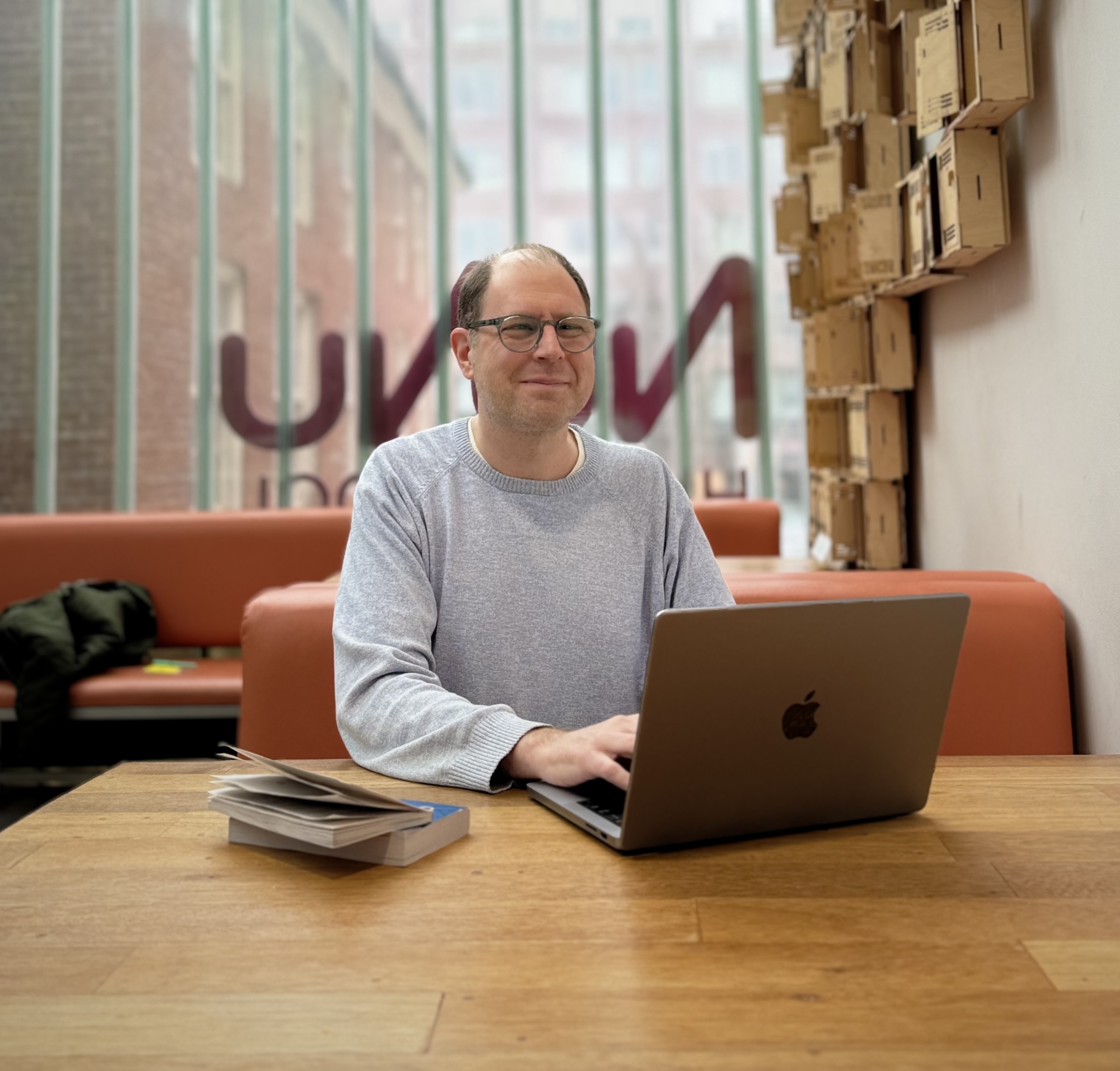
NuVu is known for its design studios—hands-on environments where students build, prototype, test ideas, and present their work publicly. It’s a model that prioritizes making and iteration over lectures and traditional classes. But as the school continues to evolve, coaches are constantly asking an important question: how can foundational skills be strengthened without losing the spirit of the studio?
This past session, college counselor and former English teacher Jeremy Adams set out to explore that question through an experimental seminar called Literature by Design.
The goal wasn’t to introduce a traditional English class into NuVu. Instead, Jeremy approached language the way NuVu studios approach design: beginning with a seed of an idea and allowing it to grow through exploration, discussion, and refinement.
“We tried to think about literature the way you would think about a studio project,” Jeremy explains. “Start with the pieces, understand how they work, and then build something larger.”
The seminar began far upstream, with the history of the English language itself—tracing its roots back to medieval Europe and the Norman Conquest. From there, students explored the mechanics of language: parts of speech, literary devices, and the ways words interact to create meaning. Rather than memorizing terms, students experimented with them, discovering how patterns like alliteration and metaphor function within real texts.
Once those foundations were in place, the group moved into literature. Students read Shirley Jackson’s short story The Lottery, searching for the literary devices they had been studying and debating how those choices shaped the story’s unsettling tone.
From there, the seminar diverged into two reading groups tackling full novels: Of Mice and Men for younger students and One Flew Over the Cuckoo’s Nest for the older cohort. Both stories, Jeremy realized later, resonated deeply with NuVu’s ethos—examining questions about difference, social systems, and the ways individuals navigate institutions.
“That part wasn’t even planned,” he says. “But afterwards I realized they were very NuVu stories.”
Like any NuVu studio, the seminar itself became an iterative design process. Jeremy worked closely with Creative Director Nada Elsonni to experiment with ways of assessing students’ thinking without defaulting to traditional coursework structures. Instead of simply assigning essays, the long-term goal is to develop more studio-like outcomes—interpretations of literature expressed through performance, filmmaking, design, or installation.
For now, the focus has been on understanding how students read, think, and write. Early assignments combine discussion, short reflections, and collaborative exploration before moving into more formal writing later in the session.
What surprised Jeremy most was how quickly many students embraced the experience.
“Some of them started seeking me out to talk about the books,” he says. “They were debating scenes at lunch, comparing the book and film versions, asking bigger questions about the characters and the ideas.”
Those conversations are exactly what the experiment hoped to spark: students engaging deeply with ideas, questioning systems, and developing their ability to articulate their thinking.
In many ways, Literature by Design mirrors the learning process NuVu encourages across all studios. It’s not a finished product. It’s a prototype—an evolving experiment in how language, storytelling, and analysis can live inside a design-driven environment.
Or, as Jeremy puts it with a smile, “It’s almost like I’m a NuVu student myself this year—iterating on the design of the studio.”


