February 4, 2026

From Studio to Site: How a NuVu Mindset Shaped Maddie Johnson-Harwitz’s Work in South Africa
No items found.

When Maddie Johnson-Harwitz arrived in Langa, a township outside Cape Town, she wasn’t arriving with a fixed plan or a tidy solution. She arrived with something else entirely: a studio mindset shaped by years of learning, teaching, and leading at NuVu.

As a NuVu alum, and now NuVu High School + Summer Operations & Communications Manager, Maddie has spent much of her life inside environments that value iteration, collaboration, and responsiveness over rigid outcomes. What she didn’t anticipate was how directly those experiences would translate to a real-world partnership halfway across the globe.

Learning to Stay With the Problem

Maddie’s connection to South Africa began during her undergraduate years at Massachusetts College of Art and Design (MassArt), when she cross-registered for a course at MIT’s D-Lab—an initiative focused on community-centered, equitable design. In that class, she was introduced to a public health challenge: emergency medical access in townships where ambulances often couldn’t—or wouldn’t—enter.

At first, the problem seemed straightforward. But as Maddie quickly learned, research alone wasn’t enough.

“They told us we needed to go,” she recalls, “and that we weren’t going to understand the problem until we went.”

So went they did. With funding from the MassArt Foundation Board, they traveled to South Africa in January of their senior year (2024) — the first of several trips.

Once there, the instinct to listen, pause, and seek deeper understanding felt familiar. It echoed the way NuVu studios ask students to sit with ambiguity rather than rush toward answers.

Once on the ground, the reality became clearer. In some areas, ambulances might wait hours for police escorts. In others, they wouldn’t come at all. The challenge wasn’t just designing a tool—it was understanding the system surrounding it.

“We really spent a lot of time thinking about implementation,” Maddie explains, “so that it wasn’t just something that we dropped off and then left.”

Those questions—Who uses it? Who maintains it? What happens after we’re gone?—are central to NuVu’s approach to design, and they became central to Maddie’s work as well.

From Product to Process

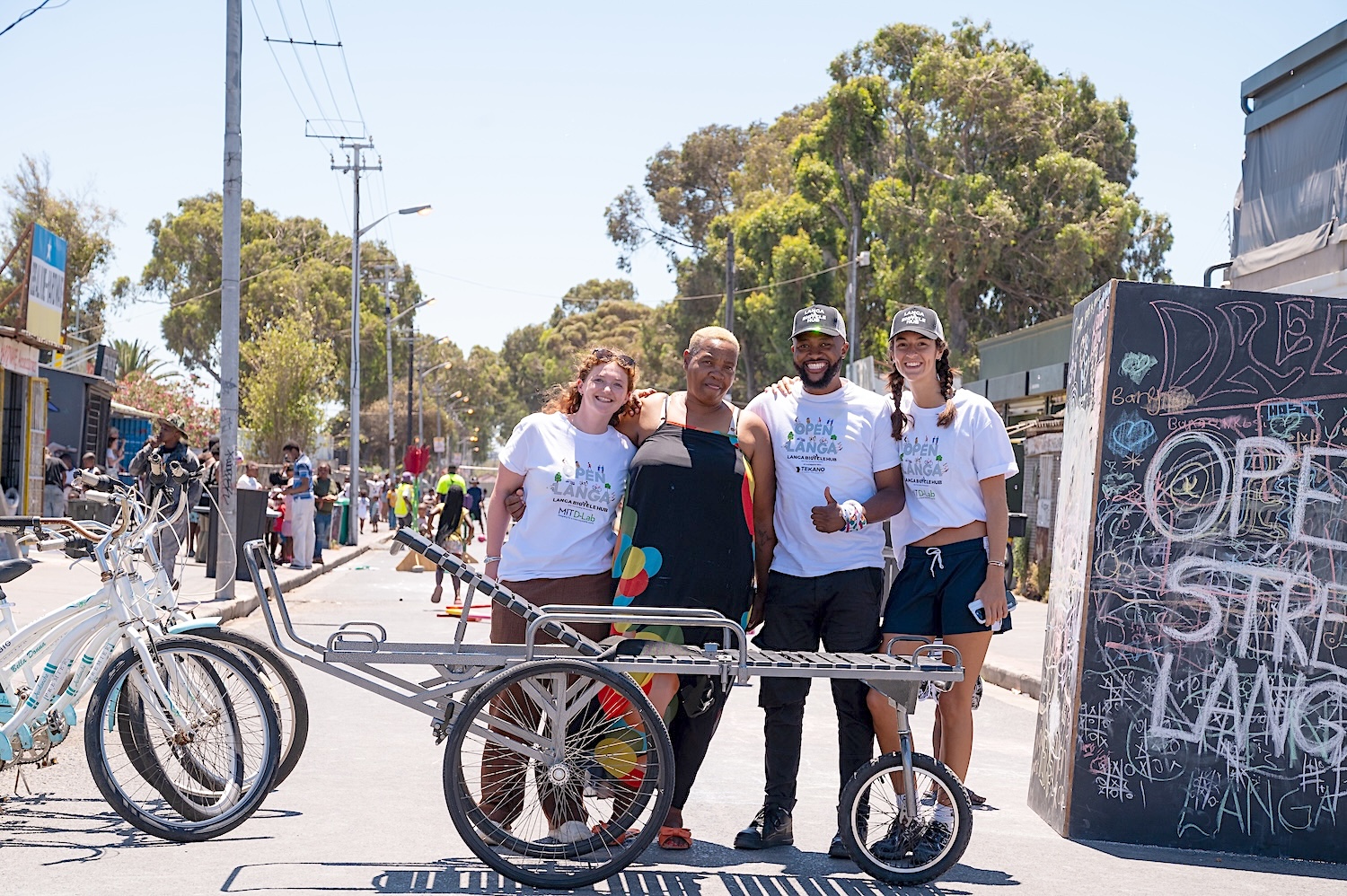
The project eventually took the form of a stretcher designed for emergency transport in communities with limited ambulance access. But just as important as the object was the process behind it. Maddie and her collaborators worked closely with local partners, including healthcare workers and a bicycle hub that serves as a community anchor in Langa.

By the time Maddie returned to South Africa in June to help launch a manufactured version of the stretcher, she had already begun shifting from “designer” to something closer to facilitator—a role she knew well from NuVu.

That shift became even more pronounced in January 2026, when Maddie was invited back—this time to help lead an MIT co-design workshop with youth in Langa. The goal wasn’t to teach a single solution, but to build creative problem-solving capacity within the community.

“You’re working with the community,” Maddie explains, “giving them skills and techniques to tackle different problems, and learning how to creatively think and problem solve.”

The structure of the workshop followed a rhythm she immediately recognized: learn, imagine, create, test. It mirrored the studio process NuVu students experience daily.

The Value of Knowing How to Pivot

Of course, the workshop didn’t unfold exactly as planned.

The curriculum had been designed for older teens, but the group that arrived was mostly younger—between 10 and 14 years old. Language barriers, attention spans, and developmental differences meant the original activities wouldn’t land as intended.

For Maddie, this wasn’t a setback—it was a familiar moment.

“I felt that my NuVu background was crucial,” she says. “It felt like I could help the MIT students successfully facilitate this workshop because I had so much experience doing this exact same thing—as a former NuVu student, as a summer coach, and now at the high school.”

Instead of forcing the plan, Maddie helped the team pivot. Drawing directly from NuVu studios and her experience with NuVu Summer programs, they shifted to low-fidelity materials and hands-on making. The group began building a physical, cardboard model of their community—a “mini Langa”—as a way to surface problems, relationships, and hopes for the future.

“They built the bicycle hub, they built their houses, they built schools and parks,” Maddie says. “They were coming up with solutions that meant something to their lives.”

What emerged wasn’t just a model—it was a shared language. The students explored

cause and effect, imagined alternatives, and worked together through productive struggle. For Maddie, it was a powerful reminder of what studio-based learning makes possible.

Ending the Way Studios Should

The workshop concluded the way many NuVu studios do: with public sharing.

Parents and community members were invited. The students presented their work—nervous, proud, and deeply invested. Certificates were handed out. Photos were taken. Emotions ran high.

“It was a very emotional last day,” Maddie recalls.

For Maddie, the moment underscored something she’s seen again and again in studio environments: when students are trusted with meaningful work, they rise to it.

A Throughline, Not a Detour

Looking back, Maddie doesn’t see her NuVu experience as a stepping stone she left behind—but as a throughline.

Her ability to guide MIT students, adjust plans in real time, and support young people in Langa didn’t come from a single course or credential. It came from years of practicing a way of learning that values reflection, collaboration, and responsiveness.

“I had a background in leading design studios and taking design studios,” she says. “I had so much to pull from—activities, materials, ways of thinking.”

In South Africa, that toolkit mattered. It helped transform a project into a partnership, a workshop into a shared experience, and a design challenge into something that belonged to the community itself.

With small resources, a small team, and a studio mindset, Maddie helped make something real—together.

February 4, 2026

From Studio to Site: How a NuVu Mindset Shaped Maddie Johnson-Harwitz’s Work in South Africa

When Maddie Johnson-Harwitz arrived in Langa, a township outside Cape Town, she wasn’t arriving with a fixed plan or a tidy solution. She arrived with something else entirely: a studio mindset shaped by years of learning, teaching, and leading at NuVu.

As a NuVu alum, and now NuVu High School + Summer Operations & Communications Manager, Maddie has spent much of her life inside environments that value iteration, collaboration, and responsiveness over rigid outcomes. What she didn’t anticipate was how directly those experiences would translate to a real-world partnership halfway across the globe.

Learning to Stay With the Problem

Maddie’s connection to South Africa began during her undergraduate years at Massachusetts College of Art and Design (MassArt), when she cross-registered for a course at MIT’s D-Lab—an initiative focused on community-centered, equitable design. In that class, she was introduced to a public health challenge: emergency medical access in townships where ambulances often couldn’t—or wouldn’t—enter.

At first, the problem seemed straightforward. But as Maddie quickly learned, research alone wasn’t enough.

“They told us we needed to go,” she recalls, “and that we weren’t going to understand the problem until we went.”

So went they did. With funding from the MassArt Foundation Board, they traveled to South Africa in January of their senior year (2024) — the first of several trips.

Once there, the instinct to listen, pause, and seek deeper understanding felt familiar. It echoed the way NuVu studios ask students to sit with ambiguity rather than rush toward answers.

Once on the ground, the reality became clearer. In some areas, ambulances might wait hours for police escorts. In others, they wouldn’t come at all. The challenge wasn’t just designing a tool—it was understanding the system surrounding it.

“We really spent a lot of time thinking about implementation,” Maddie explains, “so that it wasn’t just something that we dropped off and then left.”

Those questions—Who uses it? Who maintains it? What happens after we’re gone?—are central to NuVu’s approach to design, and they became central to Maddie’s work as well.

From Product to Process

The project eventually took the form of a stretcher designed for emergency transport in communities with limited ambulance access. But just as important as the object was the process behind it. Maddie and her collaborators worked closely with local partners, including healthcare workers and a bicycle hub that serves as a community anchor in Langa.

By the time Maddie returned to South Africa in June to help launch a manufactured version of the stretcher, she had already begun shifting from “designer” to something closer to facilitator—a role she knew well from NuVu.

That shift became even more pronounced in January 2026, when Maddie was invited back—this time to help lead an MIT co-design workshop with youth in Langa. The goal wasn’t to teach a single solution, but to build creative problem-solving capacity within the community.

“You’re working with the community,” Maddie explains, “giving them skills and techniques to tackle different problems, and learning how to creatively think and problem solve.”

The structure of the workshop followed a rhythm she immediately recognized: learn, imagine, create, test. It mirrored the studio process NuVu students experience daily.

The Value of Knowing How to Pivot

Of course, the workshop didn’t unfold exactly as planned.

The curriculum had been designed for older teens, but the group that arrived was mostly younger—between 10 and 14 years old. Language barriers, attention spans, and developmental differences meant the original activities wouldn’t land as intended.

For Maddie, this wasn’t a setback—it was a familiar moment.

“I felt that my NuVu background was crucial,” she says. “It felt like I could help the MIT students successfully facilitate this workshop because I had so much experience doing this exact same thing—as a former NuVu student, as a summer coach, and now at the high school.”

Instead of forcing the plan, Maddie helped the team pivot. Drawing directly from NuVu studios and her experience with NuVu Summer programs, they shifted to low-fidelity materials and hands-on making. The group began building a physical, cardboard model of their community—a “mini Langa”—as a way to surface problems, relationships, and hopes for the future.

“They built the bicycle hub, they built their houses, they built schools and parks,” Maddie says. “They were coming up with solutions that meant something to their lives.”

What emerged wasn’t just a model—it was a shared language. The students explored

cause and effect, imagined alternatives, and worked together through productive struggle. For Maddie, it was a powerful reminder of what studio-based learning makes possible.

Ending the Way Studios Should

The workshop concluded the way many NuVu studios do: with public sharing.

Parents and community members were invited. The students presented their work—nervous, proud, and deeply invested. Certificates were handed out. Photos were taken. Emotions ran high.

“It was a very emotional last day,” Maddie recalls.

For Maddie, the moment underscored something she’s seen again and again in studio environments: when students are trusted with meaningful work, they rise to it.

A Throughline, Not a Detour

Looking back, Maddie doesn’t see her NuVu experience as a stepping stone she left behind—but as a throughline.

Her ability to guide MIT students, adjust plans in real time, and support young people in Langa didn’t come from a single course or credential. It came from years of practicing a way of learning that values reflection, collaboration, and responsiveness.

“I had a background in leading design studios and taking design studios,” she says. “I had so much to pull from—activities, materials, ways of thinking.”

In South Africa, that toolkit mattered. It helped transform a project into a partnership, a workshop into a shared experience, and a design challenge into something that belonged to the community itself.

With small resources, a small team, and a studio mindset, Maddie helped make something real—together.

To learn more about joining our school, click this button!
Admission