December 8, 2025

Designing Dignity

No items found.

When NuVu High School’s Creative Director Nada Elsonni briefly returned to coaching this fall, it was for a studio that deepened a partnership years in the making. After previously collaborating with the Ahimsa Collective on re-entry housing and community design, NuVu students were recently invited to partner with Troy Williams, Executive Director of Restorative Media, to help bring his vision for a healing-centered ranch to life.

Williams first encountered NuVu through Ahimsa, where students previously designed tiny homes for a re-entry community created to combat recidivism in California. After witnessing that work, Williams reached out to propose a new challenge—one rooted in family history, healing, and deep community need.

A Ranch, A Legacy, A Vision

Williams recently inherited his late father’s ranch in California. To him, it wasn’t simply land—it was a vessel for his father’s dream: a retreat, a creative media center, an equine rehabilitation space, a multigenerational gathering place, and above all, a haven for formerly incarcerated individuals to heal, create, and rebuild their lives.

What he needed was a way to translate that deeply personal vision into an architectural plan that could support fundraising, planning, and long-term development.

And that is where NuVu students came in. “Our collaboration with NuVu aimed to infuse my father’s ranch with my vision for an ecosystem that serves our community,” Williams explains. “The studio turned abstract hopes into an early prototype—merging community wisdom with students’ skills and creativity in a way that shows how design can transform a space into a catalyst for healing, belonging, and possibility.”

For Elsonni, who is trained in architecture, the studio posed a unique opportunity to teach students how design can shape emotion, behavior, and belonging.

“One of my passions is neuroarchitecture—the intersection of neuroscience, psychology, and architecture,” she says. “With a project like this, the design can’t be divorced from the emotional or social experience. The students needed to understand that these spaces aren’t just buildings—they’re environments meant to support people reintegrating into society.”

The studio began not with software, but with listening. Students interviewed Williams and members of Restorative Media, absorbing stories about incarceration, community, healing, and the challenges of reentry.

Williams noticed their approach immediately. “I was surprised by their level of thoughtfulness,” he says. “They actually heard me and my team. They listened, asked clarifying questions, and treated community members as partners—never as subjects.”

This grounding period—which included research, journaling, human-centered design exercises, and reflection— ensured students did not lose sight of the project’s purpose.

Becoming the “Architectural Team”

Before any design work began, Elsonni “hired” students through an application process.

“When a client brings such a rich and personal vision, I want to be sure the students chosen are dedicated,” she shares. Architecture studios require more time and focus than a typical three-week cycle, so commitment was key.

Once selected, students got a crash course in:

  • Site Analysis
  • Architecture design principals
  • Neuro architecture
  • programming and zoning
  • precedent research
  • concept development
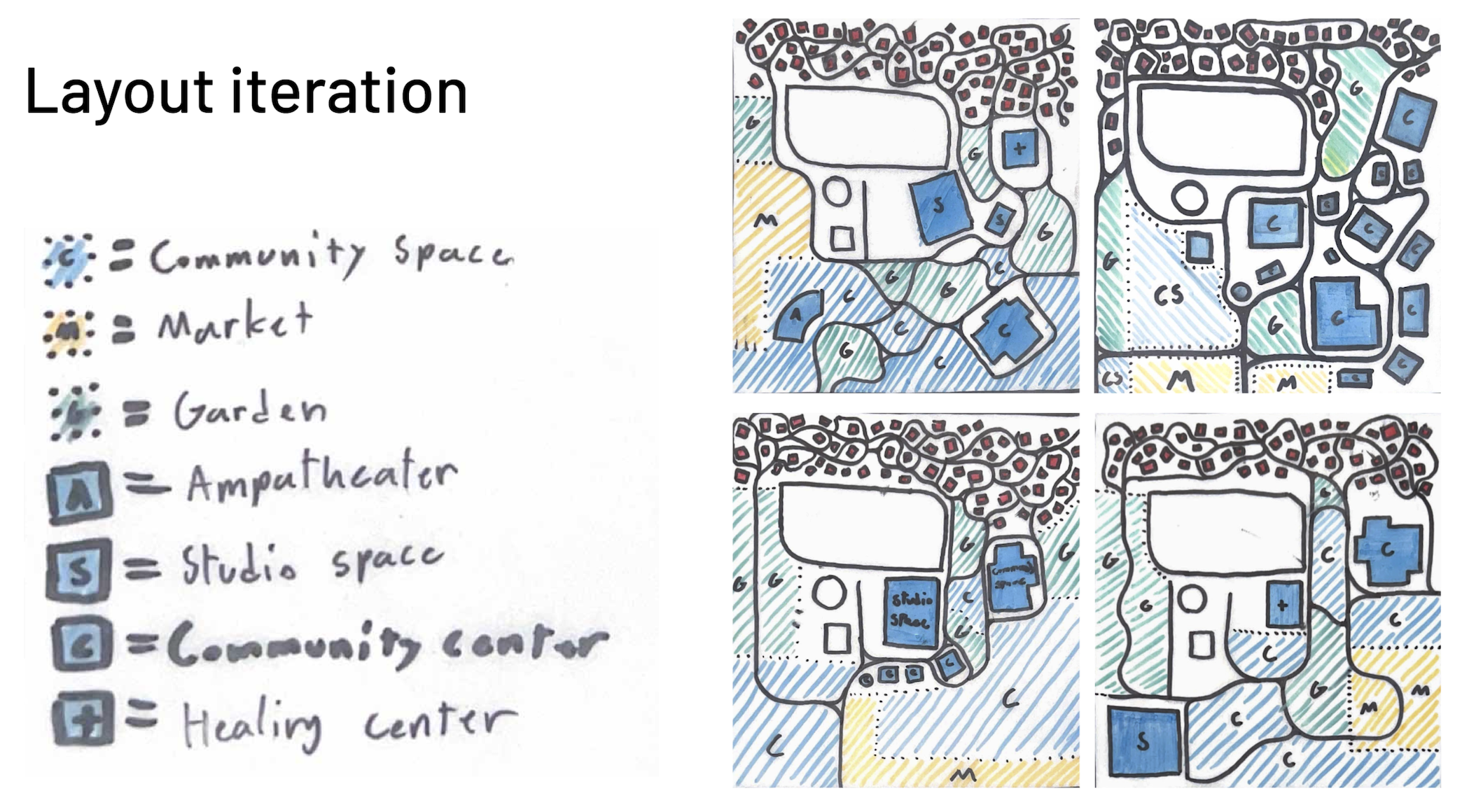
  • Sketch models & iterations

Only after this foundation did Elsonni introduce architecture tools—Revit and Enscape—so students could translate their concepts into digital form without losing their human-centered approach.

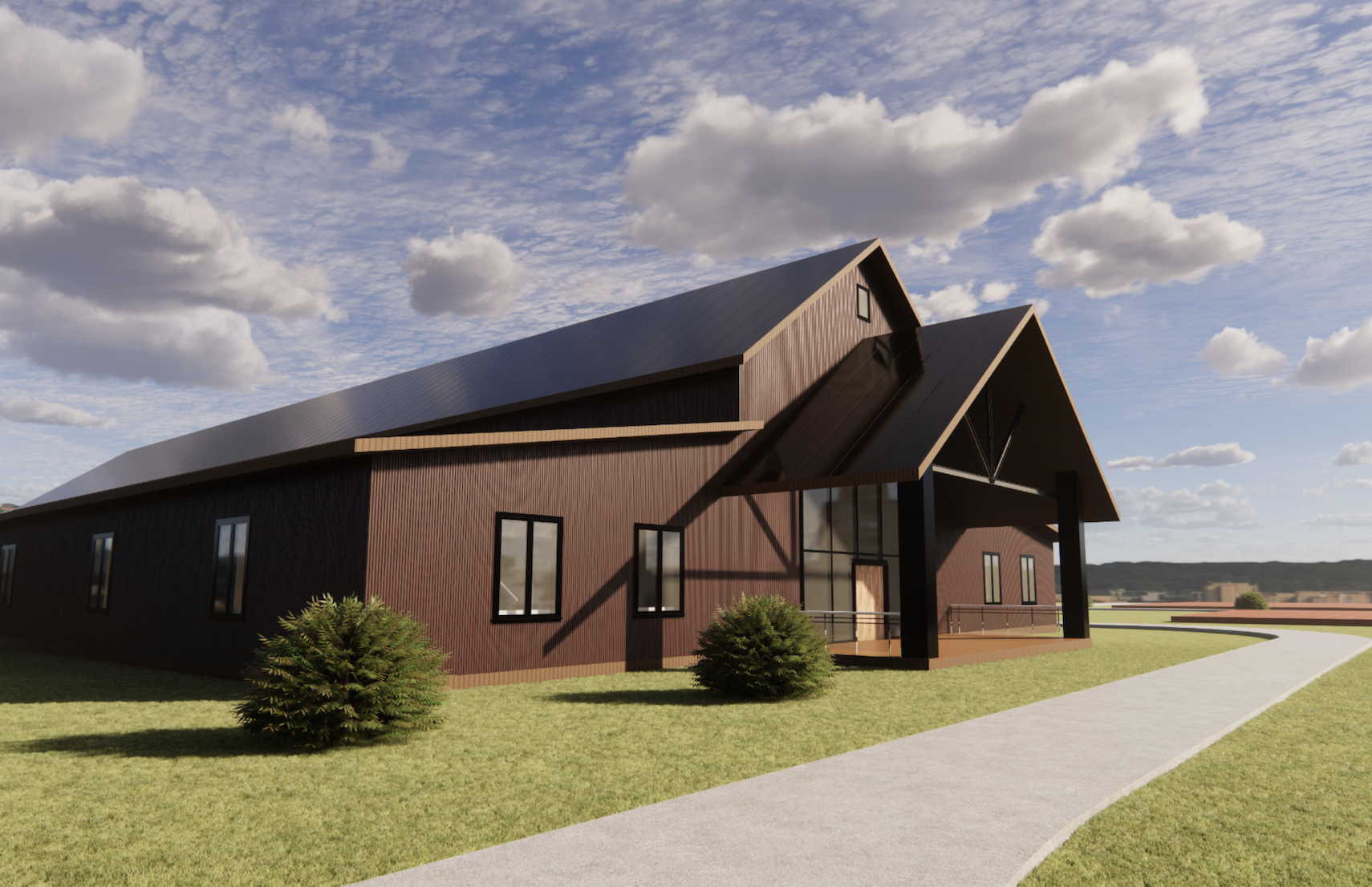
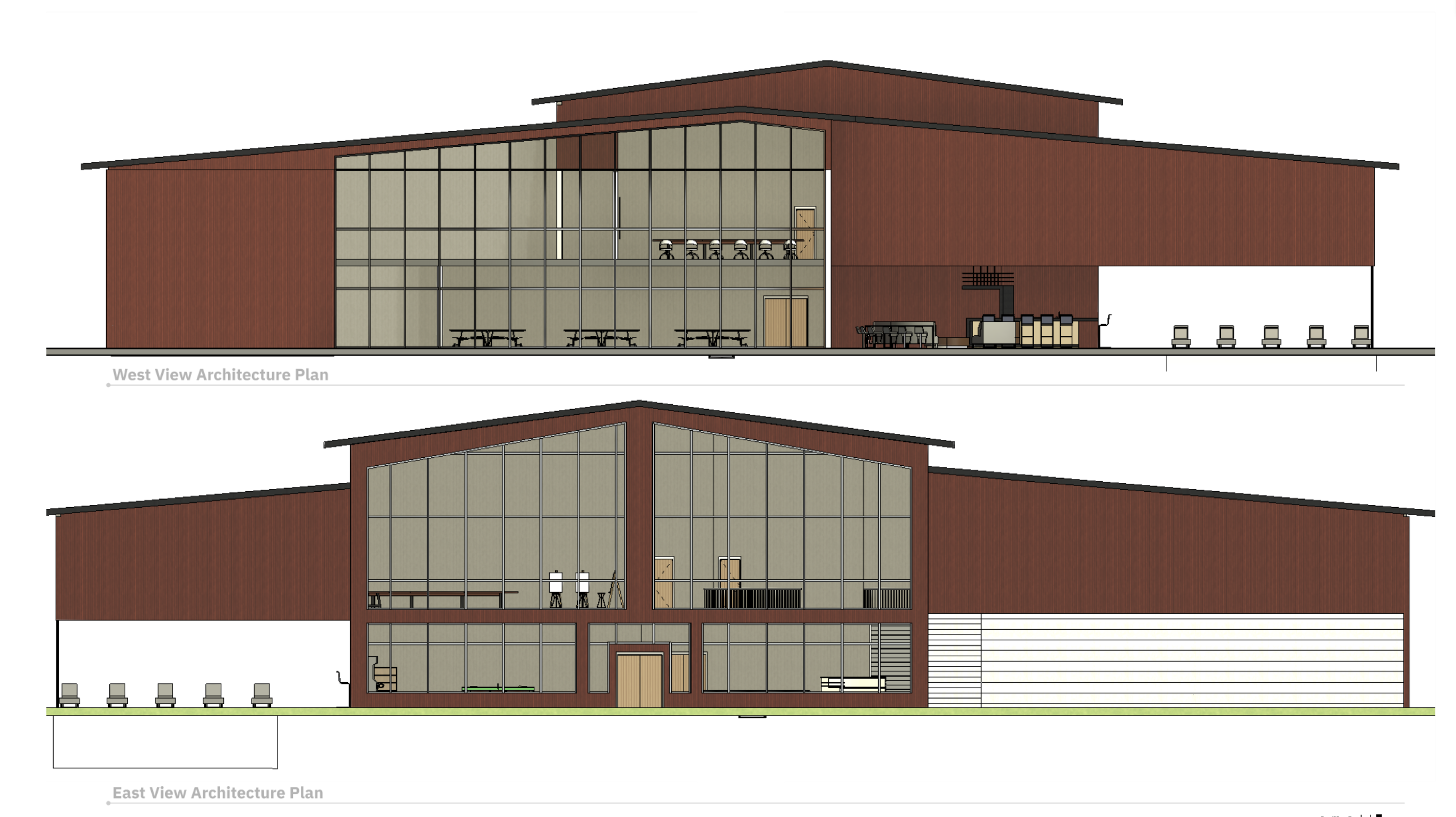
“We wanted to provide Troy with a polished architecture package,” Elsonni explains, “including drawings and a walkthrough video—something that could capture attention and help him move into the fundraising and planning stages.”

The Design: A Space for Healing and Creative Possibility

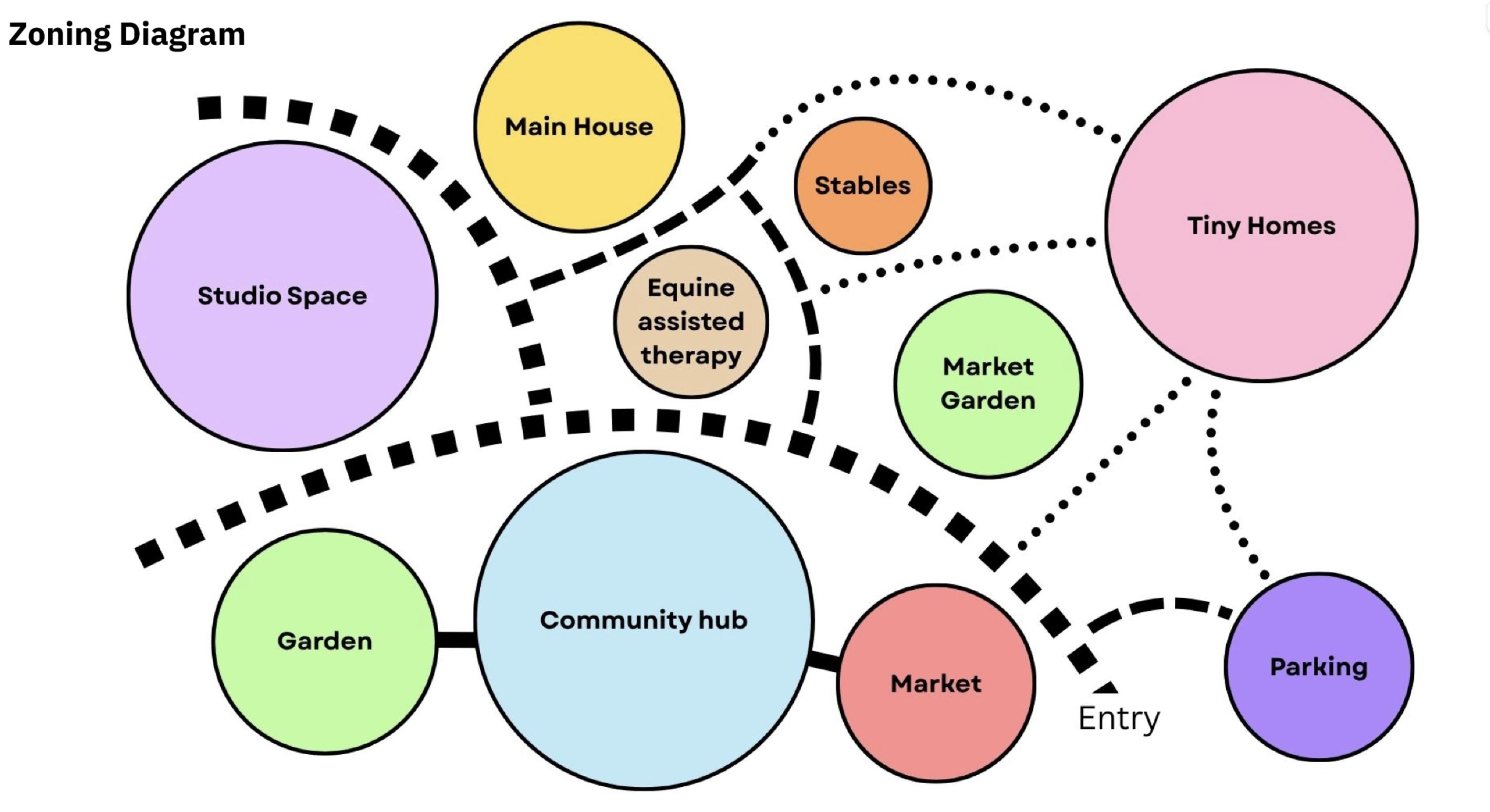
The students divided roles based on interest: some focused on the master plan; others on the creative studios, tiny homes, equine barn, gardens, or community hub.

Through ongoing pin-ups, feedback sessions, and live meetings with Williams (sometimes as he walked the ranch via FaceTime), the design evolved into a deeply coherent vision.

The final schematic included:

  • a main building with studios for film and audio recording
  • an equine-assisted therapy barn
  • a network of tiny homes for short- and long-term stays
  • an indoor/outdoor community market and garden
  • an amphitheater and gathering space
  • a multigenerational play and recreation area
  • ample parking and circulation pathways

This package now serves as Williams’s foundation for fundraising, partnership-building, and next-phase architectural development.

SEE THE STUDENTS FINAL PRESENTATION HERE

Learning Through Real Client Work

For students, the experience was transformative.

Elsonni describes the biggest learning outcome as a combination of collaboration, self-discovery, and intellectual challenge.

“It was intense work, and many of the students aren’t used to this level of complexity. But they learned how their brains think—some prioritize function, others form, others software, others emotion. They grew in awareness of their strengths.”

They also learned what it means to design for real people.

Williams notes: “I was struck by their professionalism and their genuine desire to meet the goals set for them. They went beyond blueprints—they designed with care.”

The project also offered emotional and ethical depth. Students grappled with the weight of the criminal justice system, the stories of returning citizens, and the immense privilege embedded in their own lives.

As Elsonni puts it: “It’s a privilege to work with a client whose passion is so powerful. For students to learn the foundations of neuroarchitecture and engage with this heavy, human topic—that combination is rare and deeply meaningful.”

The outcome of the studio represents the first architectural phase—the schematic phase. This gives Williams everything he needs to move forward:
communicating with contractors, raising funds, and continuing the work his father envisioned.

This partnership also ties back to the students’ earlier work with Ahimsa and their recent trip to California, where they visited reentry communities, toured facilities, and met with formerly incarcerated individuals to understand the impact of restorative housing firsthand.

That full-circle moment deepened their motivation and broadened their understanding of how design can uplift communities.

A Studio Rooted in Humanity

Through this studio, NuVu students stepped into the role of designers, collaborators, problem-solvers, and listeners. They engaged with big ideas, real people, and meaningful stakes—and, in doing so, helped bring a community vision one step closer to life.

December 8, 2025

Designing Dignity

NuVu Students Help Bring a Vision of Healing to Life
When NuVu High School’s Creative Director Nada Elsonni briefly returned to coaching this fall, it was for a studio that deepened a partnership years in the making. After previously collaborating with the Ahimsa Collective on re-entry housing and community design, NuVu students were recently invited to partner with Troy Williams, Executive Director of Restorative Media, to help bring his vision for a healing-centered ranch to life.

Williams first encountered NuVu through Ahimsa, where students previously designed tiny homes for a re-entry community created to combat recidivism in California. After witnessing that work, Williams reached out to propose a new challenge—one rooted in family history, healing, and deep community need.

A Ranch, A Legacy, A Vision

Williams recently inherited his late father’s ranch in California. To him, it wasn’t simply land—it was a vessel for his father’s dream: a retreat, a creative media center, an equine rehabilitation space, a multigenerational gathering place, and above all, a haven for formerly incarcerated individuals to heal, create, and rebuild their lives.
What he needed was a way to translate that deeply personal vision into an architectural plan that could support fundraising, planning, and long-term development.

And that is where NuVu students came in. “Our collaboration with NuVu aimed to infuse my father’s ranch with my vision for an ecosystem that serves our community,” Williams explains. “The studio turned abstract hopes into an early prototype—merging community wisdom with students’ skills and creativity in a way that shows how design can transform a space into a catalyst for healing, belonging, and possibility.”

For Elsonni, who is trained in architecture, the studio posed a unique opportunity to teach students how design can shape emotion, behavior, and belonging.

“One of my passions is neuroarchitecture—the intersection of neuroscience, psychology, and architecture,” she says. “With a project like this, the design can’t be divorced from the emotional or social experience. The students needed to understand that these spaces aren’t just buildings—they’re environments meant to support people reintegrating into society.”
The studio began not with software, but with listening. Students interviewed Williams and members of Restorative Media, absorbing stories about incarceration, community, healing, and the challenges of reentry.

Williams noticed their approach immediately. “I was surprised by their level of thoughtfulness,” he says. “They actually heard me and my team. They listened, asked clarifying questions, and treated community members as partners—never as subjects.”

This grounding period—which included research, journaling, human-centered design exercises, and reflection— ensured students did not lose sight of the project’s purpose.

Becoming the “Architectural Team”

Before any design work began, Elsonni “hired” students through an application process.

“When a client brings such a rich and personal vision, I want to be sure the students chosen are dedicated,” she shares. Architecture studios require more time and focus than a typical three-week cycle, so commitment was key.

Once selected, students got a crash course in:

  • Site Analysis
  • Architecture design principals
  • Neuro architecture
  • programming and zoning
  • precedent research
  • concept development
  • Sketch models & iterations

Only after this foundation did Elsonni introduce architecture tools—Revit and Enscape—so students could translate their concepts into digital form without losing their human-centered approach.

“We wanted to provide Troy with a polished architecture package,” Elsonni explains, “including drawings and a walkthrough video—something that could capture attention and help him move into the fundraising and planning stages.”

The Design: A Space for Healing and Creative Possibility
The students divided roles based on interest: some focused on the master plan; others on the creative studios, tiny homes, equine barn, gardens, or community hub.

Through ongoing pin-ups, feedback sessions, and live meetings with Williams (sometimes as he walked the ranch via FaceTime), the design evolved into a deeply coherent vision.

The final schematic included:

  • a main building with studios for film and audio recording
  • an equine-assisted therapy barn
  • a network of tiny homes for short- and long-term stays
  • an indoor/outdoor community market and garden
  • an amphitheater and gathering space
  • a multigenerational play and recreation area
  • ample parking and circulation pathways

This package now serves as Williams’s foundation for fundraising, partnership-building, and next-phase architectural development.

SEE THE STUDENTS FINAL PRESENTATION HERE

Learning Through Real Client Work

For students, the experience was transformative.

Elsonni describes the biggest learning outcome as a combination of collaboration, self-discovery, and intellectual challenge.

“It was intense work, and many of the students aren’t used to this level of complexity. But they learned how their brains think—some prioritize function, others form, others software, others emotion. They grew in awareness of their strengths.”

They also learned what it means to design for real people.

Williams notes: “I was struck by their professionalism and their genuine desire to meet the goals set for them. They went beyond blueprints—they designed with care.”

The project also offered emotional and ethical depth. Students grappled with the weight of the criminal justice system, the stories of returning citizens, and the immense privilege embedded in their own lives.

As Elsonni puts it: “It’s a privilege to work with a client whose passion is so powerful. For students to learn the foundations of neuroarchitecture and engage with this heavy, human topic—that combination is rare and deeply meaningful.”

The outcome of the studio represents the first architectural phase—the schematic phase. This gives Williams everything he needs to move forward:
communicating with contractors, raising funds, and continuing the work his father envisioned.
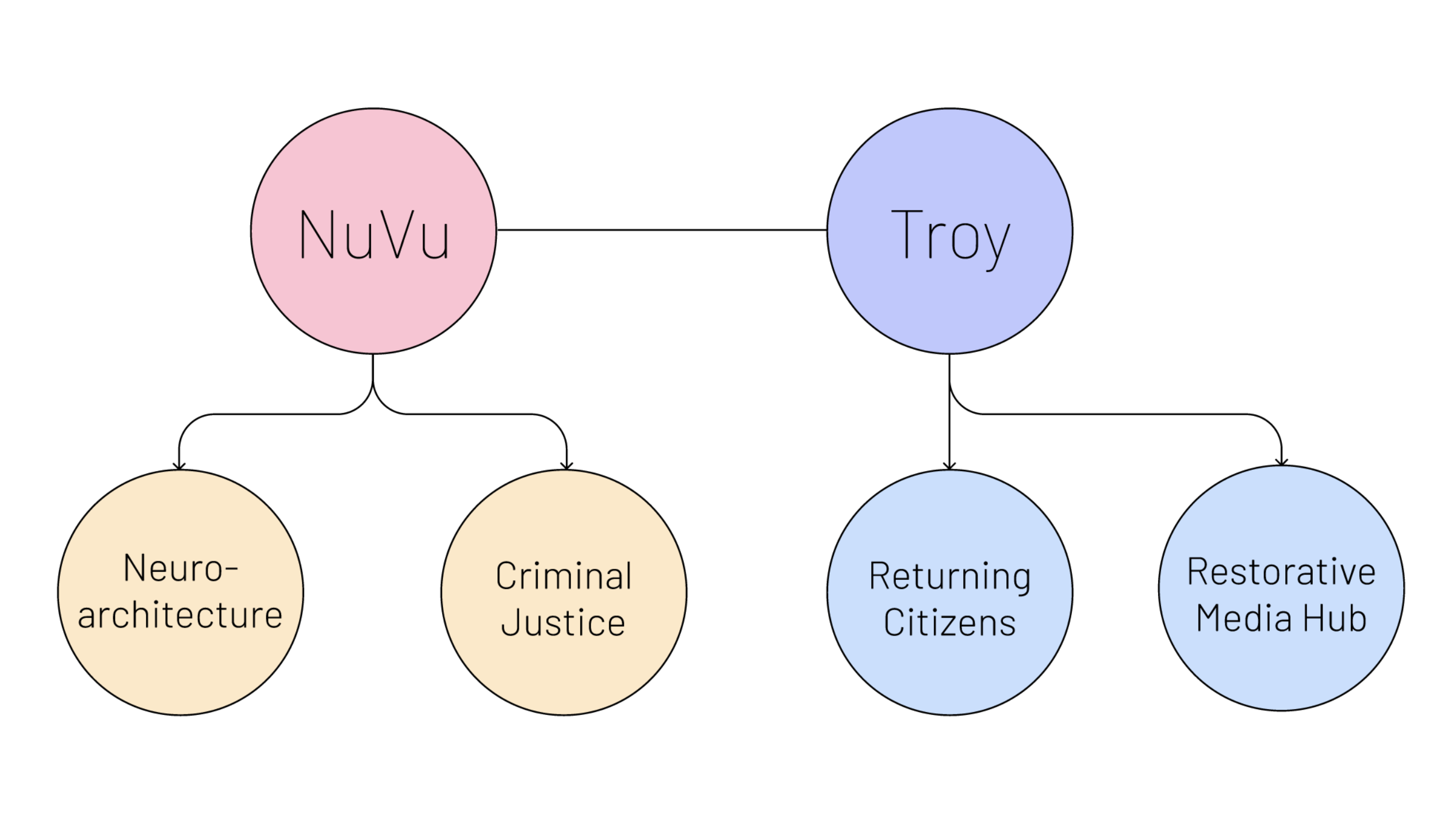
This partnership also ties back to the students’ earlier work with Ahimsa and their recent trip to California, where they visited reentry communities, toured facilities, and met with formerly incarcerated individuals to understand the impact of restorative housing firsthand.

That full-circle moment deepened their motivation and broadened their understanding of how design can uplift communities.

A Studio Rooted in Humanity

Through this studio, NuVu students stepped into the role of designers, collaborators, problem-solvers, and listeners. They engaged with big ideas, real people, and meaningful stakes—and, in doing so, helped bring a community vision one step closer to life.

To learn more about joining our school, click this button!
Admission