
January 23, 2026
An MIT Media Lab Researcher Gets Inside NuVu’s Design Studios
A conversation with Caitlin Morris
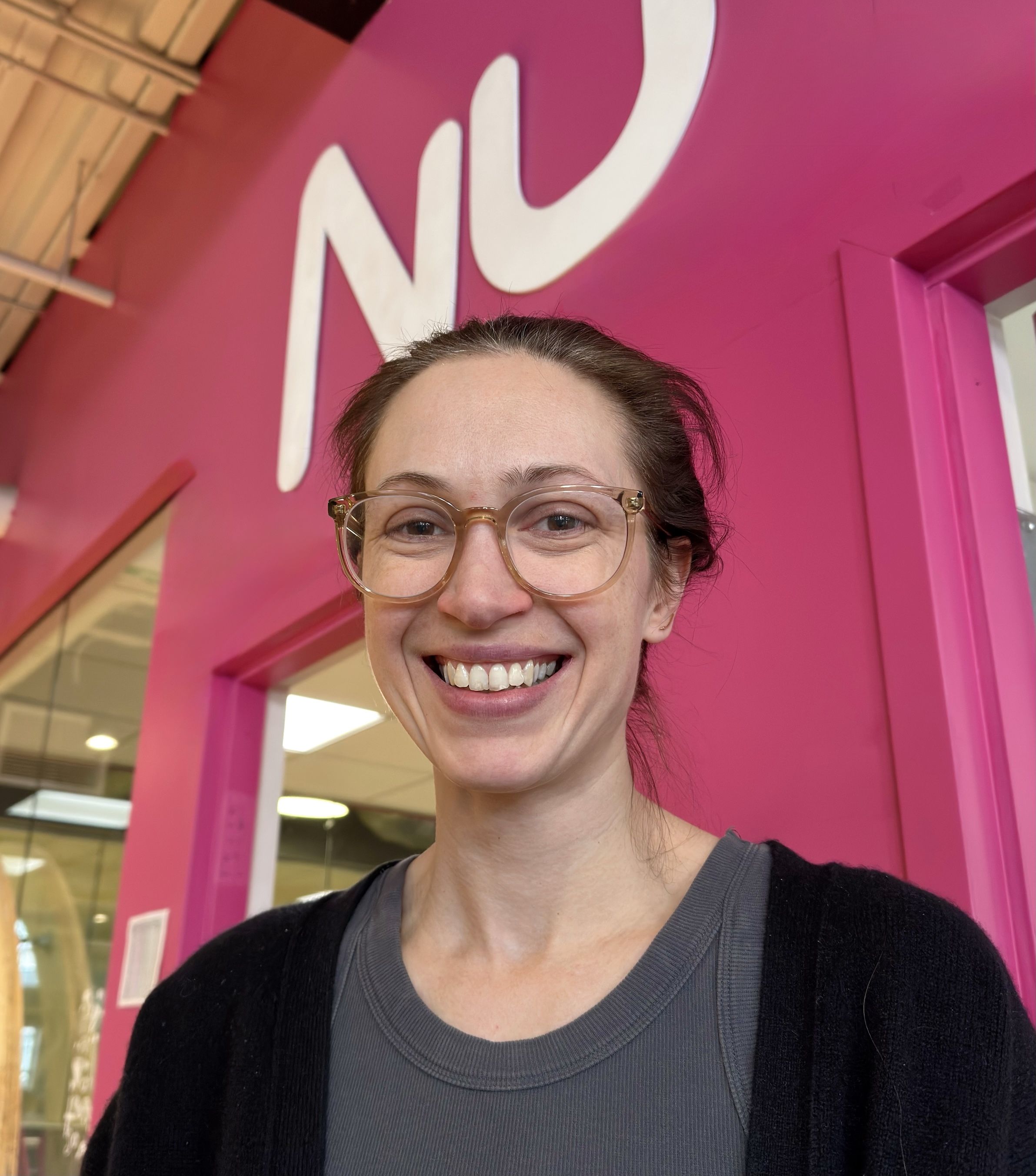
Caitlin Morris is a PhD candidate at the MIT Media Lab whose work explores how social dynamics, learning environments, and technology shape how people think and collaborate. Caitlin first came to NuVu as a guest coach, co-teaching a design studio that combined hands-on making, computation, and installation work—an experience that ultimately took students to Scotland to realize the project at full scale. This winter, she returned to NuVu in a new role: working alongside students as a researcher, studying how learning unfolds inside a project-based studio.
Can you start by introducing yourself and the work you do?
I’m a PhD student at the MIT Media Lab—hopefully for just a few more months! Before starting the PhD, most of my professional career was as a media artist. I was trying to continue research I had done as an undergraduate around cognitive science and perception—how environments shape our cognition, and how social and sensory influences affect how we think and learn.
Alongside my art practice, I was teaching a lot—computer science, programming, electronics, art and science—at places like Parsons and NYU, and also at the School for Poetic Computation in New York. That space is kind of like NuVu for grown-ups: small, project-based, interdisciplinary.
I’ve always loved teaching, especially in spaces that sit between disciplines. Over time, I became more interested in how hands-on design work, teaching, and research could be more tightly integrated.
What brought you to MIT for your PhD?
I moved to Cambridge to start the PhD because I wanted to bring more rigor to questions I’d been exploring through art and teaching. When you’re a practicing artist, you can make claims about experiences—but it can be a little fudgy. I wanted to be able to research those claims more directly.
My undergraduate background was in cognitive science and architecture, so I was already thinking about how space, systems, and learning intersect. The Media Lab felt like the right place to explore that intersection more deeply.
How did you first get connected to NuVu?
Before starting the PhD, I had a window of time where I was able to come to NuVu as a guest coach for what became the Scotland studio. It ended up expanding into two or three studios as we developed it.
It felt like a natural fit. I was teaching installation-building, physics, programming, electronics—but always through the lens of making something real. NuVu’s studio structure resonated immediately. It felt aligned with how I already thought about learning.
What brought you back to NuVu for your current research?
My PhD research has increasingly focused on social dynamics in learning—how people interact, collaborate, build confidence, and deal with frustration. There’s a lot happening right now around AI tutors and automated learning systems, and I was interested in both the optimism and the critique around that.
Much of my earlier research involved controlled lab studies, which are useful but also artificial. You’re putting people into contrived situations and asking them to “be social now.” I wanted to study learning in a more ecological, longitudinal way—inside an environment where collaboration is already real and meaningful.
NuVu made sense because students are already doing hands-on, peer-based project work. The social dynamics are authentic. I didn’t want to fabricate them—I wanted to observe and learn from what already exists.
How does your research show up in the studio itself?
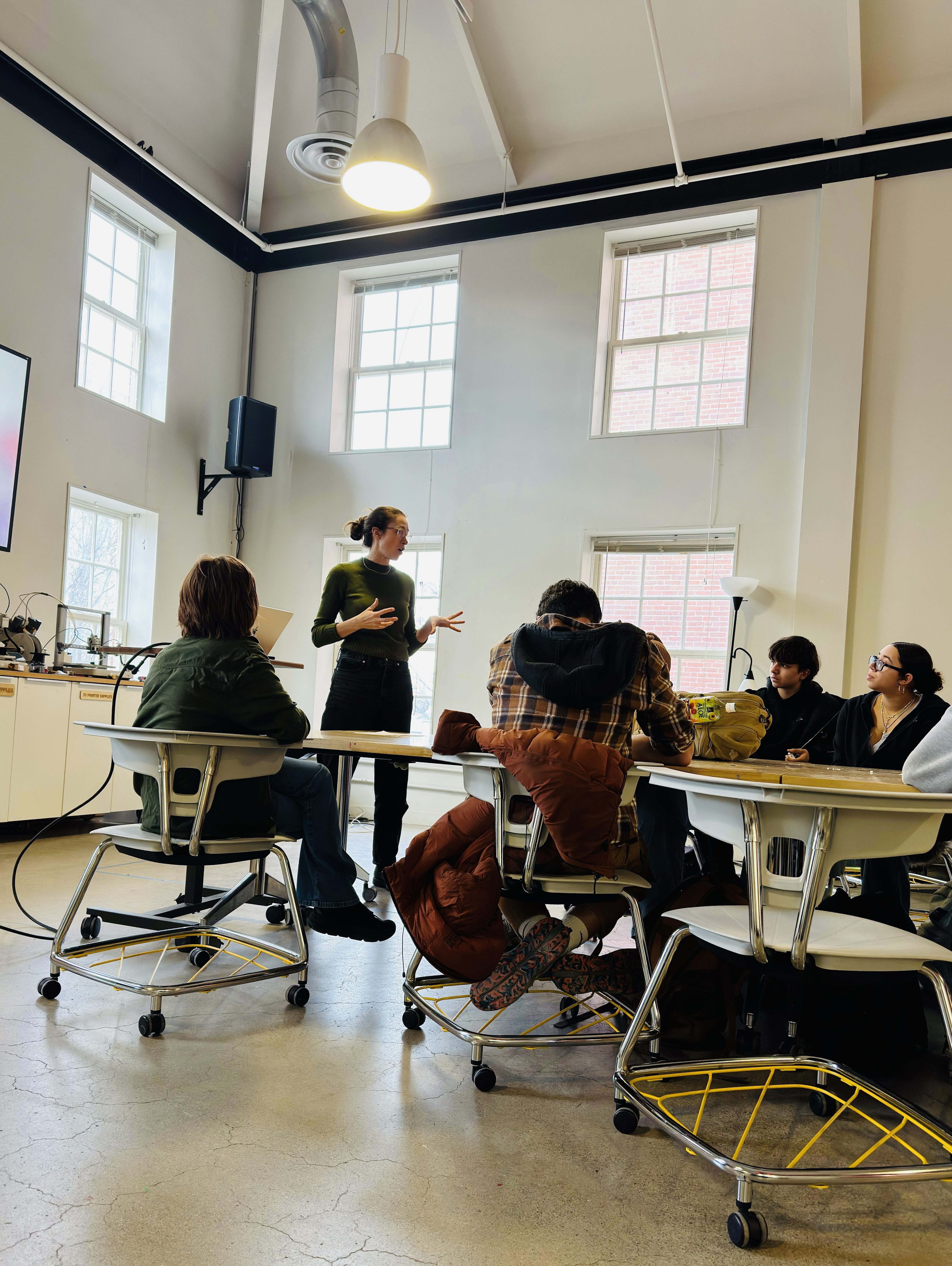
Rather than me sitting in the corner collecting observations, we designed the studio so students are learning to be researchers themselves. They’re practicing observation, reflection, and pattern recognition—thinking about how social dynamics affect their learning and their use of technology.
They’ve each chosen themes that felt most relevant to them—confidence, frustration, collaboration, technology use—and are designing interventions or speculative solutions in response. Next, they’ll gather feedback from peers and see how different perspectives shape those ideas.
Were there any surprises working with NuVu students?
One big surprise was around AI. There’s an assumption that young people are using AI for everything. But about 80% of the class initially said they’d prefer not to use it at all.
That led to much more nuanced conversations. Students talked about short-term convenience versus long-term concerns, privacy, confidence, and dependence.
That level of awareness from high school students is impressive.
What do you hope comes out of this work?
I hope to make visible the internal processes that shape how students relate to technology—things that are often overlooked in educational research. So much focus is placed on performance metrics, but students are telling us something else matters more.
A lot of what’s driving their behavior isn’t technical support or efficiency—it’s confidence, trust, and social connection. I want future learning tools and systems to reflect that reality.
Success, for me, would be designing educational systems that respond to how students actually experience learning—not how we assume they do.


